Windows VPS server: does preinstalled Windows mean the licence cost is included?
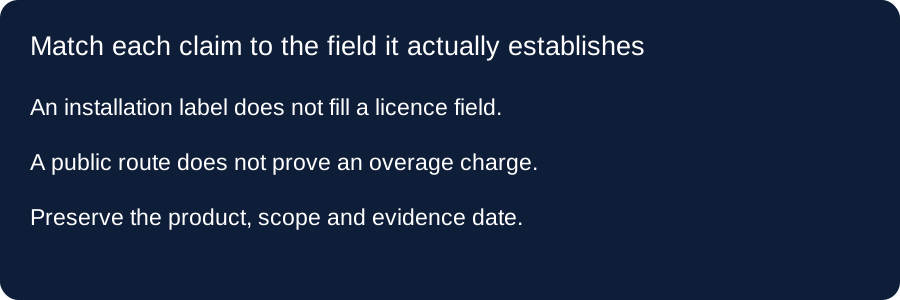
No. Preinstalled Windows establishes how a server is delivered; it does not by itself prove that a particular Windows VPS server quote includes the Windows licence cost. Look for an explicit inclusion statement, a separate licence charge, or a documented customer-licence route tied to that offer. If that evidence is missing, record inclusion as unknown rather than adding a guessed fee or treating it as zero.
What the official documents actually establish
The OVHcloud US Windows VPS page says the operating system is preinstalled. Our captured landing page does not establish licence inclusion for a selected checkout configuration. Separately, Microsoft documents Azure Hybrid Benefit as a conditional route for qualifying existing Windows Server licences, with active Software Assurance or qualifying subscriptions. That Azure-specific rule is not an inclusion promise for OVHcloud or every Windows VPS provider. Neither document reveals this reader's chosen quote or licence inventory.

Our original licence evidence register
Our register stores the provider, region, plan identifier, Windows edition, licence route, the supporting document and whether its scope matches the selected offer. It keeps installation in a separate field. For our OVHcloud landing-page sample, installation is documented while quote-specific inclusion remains unestablished. We intentionally leave a monetary licence field empty: no selected checkout or separate charge was captured. The register prevents a convenient installation label from filling a price field that the evidence has not supplied.
Run the evidence fixtures
These six cases are synthetic software inputs, not live provider quotes, customer licences or tested invoices. The checker labels evidence completeness; it does not decide legal eligibility.
| Case | Authored input | Expected evidence label |
|---|---|---|
| A | unknown; scope True | unresolved_inclusion |
| B | included; scope True | included_claim_documented |
| C | separate; scope True | separate_charge_documented |
| D | bring_your_own; scope True | unresolved_eligibility |
| E | included; scope False | unresolved_scope |
| F | bring_your_own; scope True | customer_license_route_documented |
Download fixtures and capture hashes · Download the runnable checker
Case A: the installation-only trap
We entered a matching scope, a true preinstalled flag and an unknown licence mode. The checker returned unresolved inclusion. Changing the installation flag cannot produce an included claim, because that flag is deliberately absent from the inclusion decision. This is a test of our field separation, not an assertion that a particular provider charges extra. The missing statement remains a question to resolve for the actual offer. No amount is calculated from the operating system label.
Case B: an explicit scoped inclusion claim
Our second fixture supplies included mode and a matching offer scope. The checker returns included claim documented. That label means the synthetic evidence says included for the selected scope; it does not certify the provider, authenticate a licence or guarantee a final payable total. Region, edition and plan identifiers belong beside the statement so it can be checked again. The contrast with case A tests whether explicit evidence, rather than installation alone, changes the result.
Case C: a separately documented charge
The third input supplies separate mode, matching scope and a true charge evidence flag. Its result is separate charge documented. We also removed the charge evidence in an additional test and obtained unresolved charge. This distinguishes a known charging route from a completed price lookup. Our fixture carries no monetary value, billing period or currency, so the output cannot become a numerical surcharge. A real comparison would still need the provider's applicable amount and unit.
Cases D and F: customer licences need their own evidence
Both fixtures use customer licence mode and matching scope. Case D leaves eligibility evidence unknown, which returns unresolved eligibility. Case F sets that evidence flag true and returns customer licence route documented. The true flag is invented test data, not a finding about any reader. Microsoft's documented prerequisites motivate keeping this field separate. We do not infer eligibility from possession of an installation image, a product key or the ability to boot Windows.
Case E: evidence for a different scope
This fixture supplies an included statement but marks scope matching false. The checker returns unresolved scope before inspecting the charging mode. A statement attached to another plan, region or edition therefore cannot clear our register for the intended offer. We separately tested a missing scope flag and got the same unresolved result. This conservative ordering makes the evidence reference useful: it must identify what the claim covers, rather than merely proving that some Windows offer exists.

Does unknown mean that the Windows licence costs extra?
No. Unknown means the collected evidence has not established inclusion or a separate charge for the selected quote. It is not a zero, an extra fee or proof of invalid licensing. Request an offer-specific statement before relying on the comparison. A customer-provided licence route also needs its own documented eligibility check; installation alone answers neither question.
What this audit has not tested
No server was rented, no licence was purchased and no billing account or checkout was accessed. The checker is a reproducible evidence model, not a live billing tool or a legal licensing assessment. Final tax, credits, selected configuration prices and reader-specific rights remain outside this audit. The synthetic cases should not be presented as provider offers.
Official evidence
Public documentation captured October 9, 2026. Original field audit and synthetic fixtures; no paid test.